April 25, 2013

Brigitte Bardot Meets Frankenstein


The Frankenstein Monster checks out Brigitte Bardot’s assets in a photomontage illustrating a short humor piece — call it skin mag whimsy — for Hi-Life magazine, cover dated May 1959. The author is Forry Ackerman, moonlighting from his duties as editor of Famous Monsters of Filmland, then only 3 issues old.

In Frankenstein’s Bebe?, Ackerman imagines a movie where the barely articulate Frankenstein Monster builds his own mate. “A virgin Brigitte,” reads Ackerman’s colorful prose, “burgeoning into a life of nubility, nude as the Marilyn Monroe calendar on September Morn as she lies supine on the operating table…” The Mad Doctor/Monster presses “a twitching ear to her bewitching poitrine to detect the first heartbeat.

A former model, young Brigitte Bardot became an instant sensation and an international sex symbol — nicknamed Bébé, from her initials — with her appearance in Roger Vadim’s And God Created Woman in 1956. Ackerman’s title for his imaginary Frankenstein/Bardot film, Frankenstein Created Woman, predates the Hammer film of the same name by eight years! Furthermore, Ackerman imagines the Bébé Bride wearing “a pseudo-bikini hastily contrived from some medical gauze in the lab”, a perfect description of the flimsy costume worn by Susan Denberg in promotional stills and the poster from the Hammer entry of 1967.

Switching to screenplay format, Ackerman recounts the closing moments of his mind’s eye movie as Bébé's bosom “heaves convulsively with her first breath of life!” The Monster growls, “You — girl. I — make — you!”, whereupon Bébé, who, has it happens, had been given the brains of a nymphomaniac, unfastens her “diaperette”, and the film ends on a Technicolor closeup,  Her gluteus glorious suddenly leaps to life… The Frankenstein Monster meets the barefoot girl with cheeks of tan! It is THE LIVING END!

Hi-Life was published out of New York City by Wilmot Enterprises, one of countless men’s mags peppered with nudie pictures, discount versions of the massively popular and revolutionary Playboy magazine first published in 1953. Ackerman might have become acquainted with the title as a literary agent. That’s how he met Famous Monsters publisher James Warren, placing work by his clients in Warren’s own Hefner-inspired men’s mag, the short-lived After Hours. The two men hit it off and Warren hired Ackerman as editor of Famous Monsters, launched in February 1958.

In another Hi-Life/Forry/Famous Monsters connection, the March 1963 issue of Hi-Life carried a jokey article about the popularity of horror movies called How to Make a Monster, by one Harry Schreiner. The title of the article used Famous Monster’s very distinctive logo. It’s unlikely that Ackerman had any involvement, or that he or FM publisher Warren would have condoned the swipe.

With big thanks to collector George Chastain for sharing his copy of Hi-Life.

Excerpts from Hi-Life on Perverse Osmosis.
A collection of Hi-Life covers on Stagmags.

April 17, 2013

The Posters of Frankenstein :
Small Run Bride of Frankenstein, 1935

Here’s a nice, small-run typographical poster for Bride of Frankenstein — Adults! 15 cents! — playing in October 1935 at Bird’s Rivoli, a movie house in East Tawas on Saginaw Bay at Lake Huron. The week’s worth of films advertised were all new, all from 1935.

Independent, out of the way and catering to a small-town crowd, films never ran long — Bride played only four times over two days — and it made no sense to spend money and send away for lithographed posters and lobby cards. Simple cards like this one, printed locally, did the job. Only a handful would be produced, jazzed up with yellow, green or orange colors, for front-of-house display and, perhaps, distribution to nearby stores and pasting on fences within the community.

Details are scarce but promoter Herman Bird was active in Michigan, operating several theaters from the silent era and into the Fifties, including the Family Theater, and another Rivoli in Grand Rapids. Bird’s Rivoli on US23 in East Tawas was also known as the Bay Theater for a while. It closed some fifty years ago, its building surviving as a meeting hall. Ultimately, it was leveled and turned into a parking lot.

April 11, 2013

The Frankenstein Special: Blue Skies (1946)

Call it ‘Astaire and Crosby Meet Frankenstein’ as comic Billy De Wolfe mimics the Monster in Blue Skies, a Paramount musical from 1946.

The Frankenstein cameo comes at 8:40 into the film. Bing Crosby, who runs a high-toned supper club, has to deal with a boisterous drunk. He signals his sidekick, waiter De Wolfe…

Here’s the clip:

Bulked up in his backwards coat, hair smoothed down, cheeks sucked in, De Wolfe transforms into a convincing Karloffian Frankenstein Monster, sans makeup save for a green light on his face. The stunt is all body language.

Blue Skies is Hollywood fluff rendered in gorgeous Technicolor, it’s flimsy romantic triangle plot a vehicle for a generous catalog of Irving Berlin songs and dazzling dance numbers that included Fred Astaire’s classic Puttin’ On the Ritz — later famously parodied in Young Frankenstein (1974).

Billy De Wolfe (1907-1974) honed his song and dance act in Burlesque, graduating to musical theater, Broadway, and on to a relatively short but showy film career — a dozen film in the Forties — perfecting his signature foppish, fastidious character in pencil mustache. He was much busier in television as a sitcom foil, talk-show raconteur and variety performer, often appearing in drag as “Mrs. Murgatroyd”. Through it all, De Wolfe toured extensively on the nightclub circuit. There is no record of his act, but as an impressionist, he may very well have originated the Frankenstein routine for his one-man show.

The extremely inebriated gentleman in the clip is Jack Norton (1889-1958), a ubiquitous bit player whose specialty was the comic drunk. He appeared wild-eyed, weaving perilously across the set, fumbling cigarettes, bumping into furniture and slurring his lines in countless film, with notable tanked turns opposite The Marx Brothers (A Day at the Races, 1937), and W.C.Fields (The Bank Dick, 1940). He also appears perfectly plastered in James Whale’s The Great Garrick (1937) and blotto in The Ghost Breakers (1940), with Bob Hope. In real life, Norton never touched the stuff.  

April 9, 2013

Rondo Awards Announced
FRANKENSTEINIA is First Runner-Up for Best Blog!


The Rondos are, by far, the most prestigious awards in the classic horror field, casting a vast net — 35 categories! — to honor the best in classic horror research, creativity and film preservation. In this record year, over 3400 voters participated. The winners of 2013 were announced on Monday.

I am proud indeed to report that FRANKENSTEINIA has placed as First Runner-Up in the Best Blog category. The Rondo for top blog most deservedly goes to The Collinsport Historical Society, Wallace McBride’s truly outstanding and beautifully designed site devoted to Dark Shadows and things related.


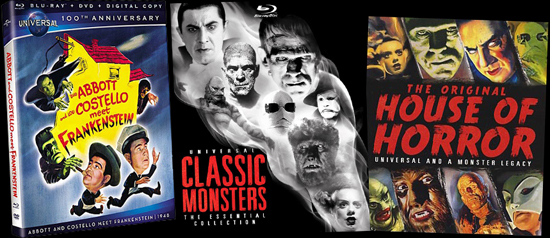
In Frankenstein Rondo news, the Abbott and Costello Meet Frankenstein Blu-Ray edition was crowned as Best Classic DVD. Universal Classic Monsters: The Essential Collection wins for Best Classic Horror Collection and the accompanying booklet, The Original House of Horror, wins as Best DVD Extra.

A Rondo for Best Toy, Model or Collectible goes to sculptor Jeff Yagher for his amazing Bride of Frankenstein.

Frankenstein-related Honorable Mentions go to Dr. Shocker’s Frankenstein vs Wolf Man Political Debate, Fan Event category, and Steve Niles and Bernie Wrightson’s Frankenstein Alive, Alive, in the Horror Comic category. Tim Lucas’ Video Watchdog review of the Dracula and Frankenstein Blu-Rays gets an Honorable Mention in the Best Article category and, by the way, Mr. Lucas was also honored as Best Writer.

In the five years I’ve been blogging, FRANKENSTEINIA has collected seven Rondo nominations. In the Best Blog category, we’ve landed an Honorable Mention, a Best Blog win for 2010, and we’re First Runner-Up for the third time. Along the way, we also scored an Honorable Mention for the Boris Karloff Blogathon as Best Fan Event, and a nomination for Best Article. All of those translate, I realize, into a lot of votes, for which I am humbled and very grateful. Thank you, all, for your continued support.

Most of all, there are no words to express my gratitude and admiration for the monumental task of running the Rondos, shouldered every year by David Colton on behalf of the Classic Horror Film Board. Thank you, David. 


The full list of Rondo winners.

April 5, 2013

The Art of Frankenstein : William Stout


Monsters changed my life” says artist William Stout. 

As a young boy, he loved dinosaurs and monster movies and, with the generous encouragement of a schoolteacher, he practiced and perfected his love of drawing. By the early Seventies, he was assisting Russ Manning on the Tarzan newspaper strip and collaborating with Harvey Kurtzman and Will Elder on Little Annie Fanny for Playboy. Over time, he would contribute startling designs for such films as Conan, The Mist and Pan's Labyrinth.

Today, Bill Stout is a giant among fantasy artists, and his exacting dinosaur illustrations have earned him recognition as an expert in the field of paleontology. 

The fabulous pen and ink Frankenstein here — click the image to see it bigger — is Stout’s heartfelt homage to Jack Davis’ and his famous "Six-Foot Frankenstein" illustration.


Check out William Stout’s website, but be warned… You WILL be blown away.

April 2, 2013

Thursday's Child Front-of-House Still


As a follow-up to my previous post, here, a bit scuffed and yellowed, is a surprising front-of-house still — a British lobby card — for Thursday’s Child (1943) revealing the Frankenstein cameo. I wonder if patrons were confused, wondering what this posed shot of Kathleen O’Regan reacting to the iconic Monster had to do with this particular movie. Any concern about scary content was relieved by the “U” rating on the card, standing for “Universal”, signifying all ages admitted and suitable for children.

Ironically, the very same year as The Monster’s gag appearance in Thursday’s Child, Universal Pictures’ 1935 Bride of Frankenstein was re-released in the UK with a dreaded “H” certificate, indicating “horror”, alerting parents and strictly limiting admission to 16 year-olds and over. Starting in 1932, the “H” cert was slapped on any horror film that wasn't banned outright. The “H” was replaced by the “X” certificate in 1951. The equivalent today is the “18” certificate.

The British classification system, first introduced in 1912, has been revised through the years, with horror, in particular, being re-evaluated as the shock effect of older films attenuates. Classic horror that rated an “H” in the Thirties are routinely reclassified as “15” today. 

Image from the collection of Robert Kiss.